
“To plant a garden is to believe in tomorrow….”
“The glory of gardening: hands in the dirt, head in the sun, heart with nature.” — Alfred Austin
I could not just pick just one quote for this blog! I truly believe in both of them and they resonated in my heart. To us, gardening is our happy place! We love to play in the dirt. It’s not a chore to us. From starting the seed early to planting them in the ground to the harvest and then putting the garden and then to bed for the winter gives us such joy. Growing your own fresh organic fruits and vegatables is a reward beyond measure.
In our younger years we had a traditional garden. What I mean by that is level with the ground. Bending over wasn’t an issue back then!. But since we are “Late Bloomers” on this new homestead we have been looking into raised beds. Raised beds are exactly what it sounds like. These are higher off the ground so less bending but a little more difficult to maintain. I’ll get into that later. These traditional gardens are perfect for zones that have a longer growing season. the larger the number the longer the growing season. This type of garden bed was perfect for the old farmhouse we lived in as it was in zones 4-5; see the map below. (1) Plus, most of the time, the soil is better. By better I mean dark, rich and most likely a growing plot a few generations back. The darker the soil the happier most plants like it!
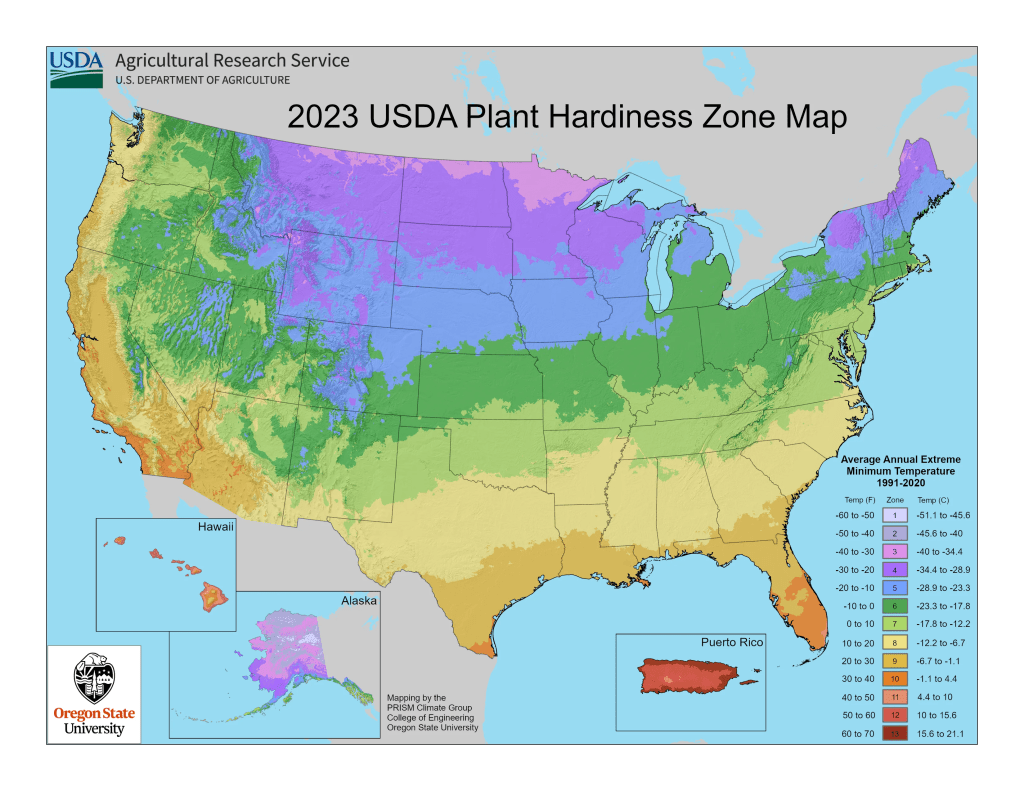
We are in Zones 2 and 3, where the growing season is short and the soil—full of sand, stones, and clay—needs a lot of love. For us, the logical step was building raised beds.
Our first bed was built entirely from accumulated scrap: 4×4 legs, rough-cut basswood trim, and old metal roofing. To fill it, we used the ‘hugelkultur’ method. (2) This is a German term meaning “hill culture” and the cut logs placed at the bottom acts like a sponge. So, we layered the bottom quarter with 2-3″ in daimeter logs, followed by sticks and brush, then grass clippings and leaves, and finally, a top layer of organic garden soil.
It certainly wasn’t ‘pretty,’ but it worked perfectly. We could stand comfortably to work the soil and harvest our vegetables without the strain.
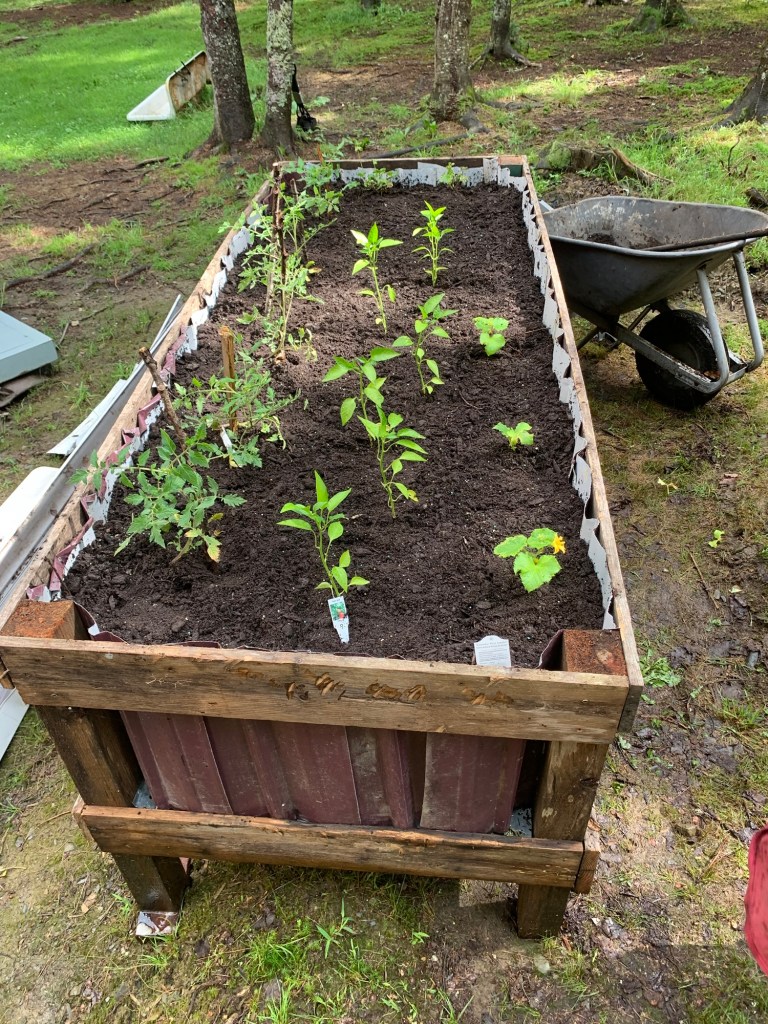
We were quite proud of that first little raised bed. Even though we started late in the season, we harvested tomatoes, cucumbers, and peppers for our salads!
The downside? The bed didn’t survive the winter. Under the weight of hardpack snow, the basswood—a soft hardwood that decays quickly—failed. We were left with a lopsided bed and a return to the drawing board.
To save money, we decided to clear our own spruce trees to build mounds the following season. We thought it would just take some elbow grease and muscle rub. ‘Easy as pie,’ right? Not exactly. Cutting twenty trees to let the sun in became overwhelming. Every weekend was consumed by removing tree branches and stacking, and by the time ten trees were left, fall was fading into snow.
Then came a blessing. A local logger offered to finish the clearing for us. They left us with an abundance of manageable limbs for our beds and—as a surprise bonus—a check for some harvested poplar! We felt incredibly grateful.
As always: stay positive, stay focused, and remember that with challenge comes change—and change is good!”


Leave a Reply